What Actually Heals? Freud, Neuroscience, and the Talking Cure
A Lecture and Discussion with Professor Mark Solms
Please note – this event is not hosted by the Neuropsychoanalysis Association – for any questions
regarding registration please email Dr David Bullard at: David.Bullard@ucsf.edu
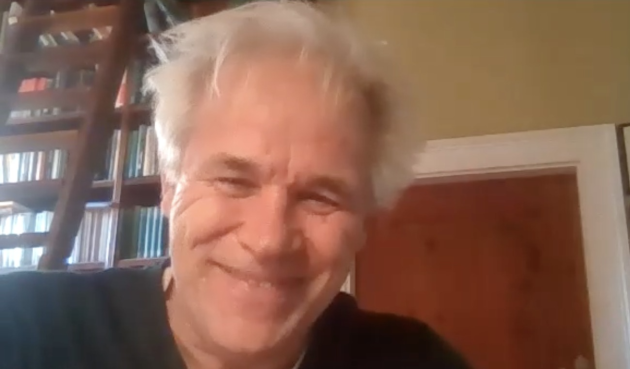
Professor Mark Solms
Sunday, 15 November 2026
9:00 AM – 11:00 AM PST
Please click here for further information and to register.
Most of us were trained to see Freud as a historical figure whose theories did not survive scientific scrutiny. Yet nearly every therapist today, whatever the modality, relies on ideas he introduced: that symptoms have meaning, that the past lives on in the present, and that talking within a relationship can change how a person feels and lives.
Mark Solms is a psychoanalyst and neuropsychologist, Chair of Neuropsychology at the University of Cape Town, and founder of the field of neuropsychoanalysis. In The Only Cure, he argues that modern brain science is confirming the core of what Freud discovered about mental suffering, even where Freud’s specific theories were wrong. His provocative claim is that lasting relief comes only from treatment that finds and addresses the subjective causes of a person’s suffering.
This webinar is not about defending psychoanalysis. It is about what works in psychotherapy, explained by one of the few people who can speak with authority about both the brain and the consulting room. Whether you practice CBT, EMDR, ACT, somatic, couples, or integrative therapy, you will leave with a clearer understanding of why your best work succeeds.
Professor Solms’ lecture has three parts followed by conversation and audience questions:
1.Why symptoms make sense. Feelings as the brain’s signal of unmet needs, and symptoms as protective solutions rather than defects.
2.How talking changes the brain. What neuroscience tells us about emotional experience, prediction, memory reconsolidation, and the therapeutic relationship as the vehicles of lasting change.
3.What we’ve gotten wrong, and what to take home. Where Freud went astray, where the broader field has also erred, and practical lessons for therapists of every orientation.