What sort of language is the unconscious structured like?
A Lacanian neuropsychoanalytic perspective
Please note – this event is not hosted by the Neuropsychoanalysis Association – for any questions
regarding registration please contact shanunshir@yahoo.com
John Dall’Aglio
20 July 2026
6:00 pm – 7:30 pm (PT)
Lacan’s “return to Freud” gravitates around his aphorism that the unconscious is structured like a language. This is often cause for criticism from non-Lacanian analysts. These critiques range from prioritizing affects to early, implicit relational encounters, all prior to verbal development. Likewise, neuropsychological research demonstrates the importance of but not predominance of language in psychodynamic processes. Perhaps most significantly, Freud himself argued that the system unconscious consists of thing-presentations whereas word-presentations belong to the domain of the system (pre)conscious.
However, Lacan’s aphorism has multiple meanings beyond the unconscious consisting of word-forms. I highlight that the key signifier is “like”: to be structured “like” a language is to be structured according to differential representatives. These include representations beyond words per se. A neuropsychoanalytic perspective on various functional systems organized in a differential manner (including basic emotions, motor systems, and visuospatial cognition) opens avenues for connecting Lacanian concepts and clinical interventions (e.g., punctuation, scansion) with relational perspectives. I will provide a sketch of a Lacanian neuropsychoanalytic functional model of brain organization according to differential representatives that need not be words.
Please click here for further information and to register.
Presenter
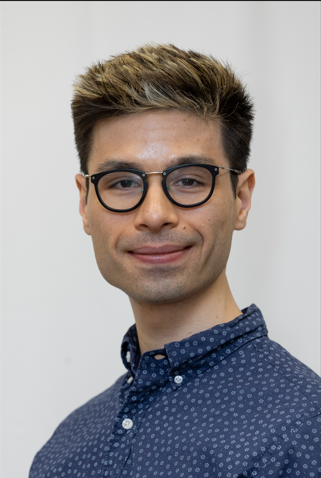
John Dall’Aglio is a clinical psychology PhD candidate at Duquesne University. His scholarly and clinical research focuses on the intersection of psychoanalysis and neuroscience, especially Lacanian neuropsychoanalysis. He conducts empirical research on primary process in brain injury, psychological assessment, and on the teaching of neuropsychoanalysis in undergraduate education. He is the author of A Lacanian Neuropsychoanalysis: Consciousness Enjoying Uncertainty (2024, Palgrave) and Mark Solms: A Contemporary Introduction (forthcoming, Routledge).